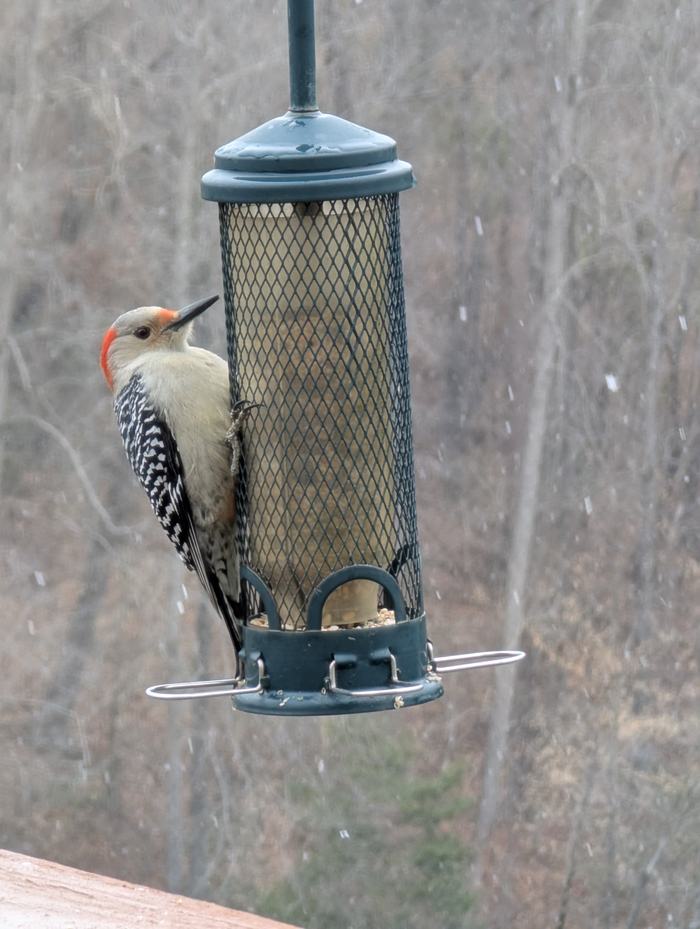
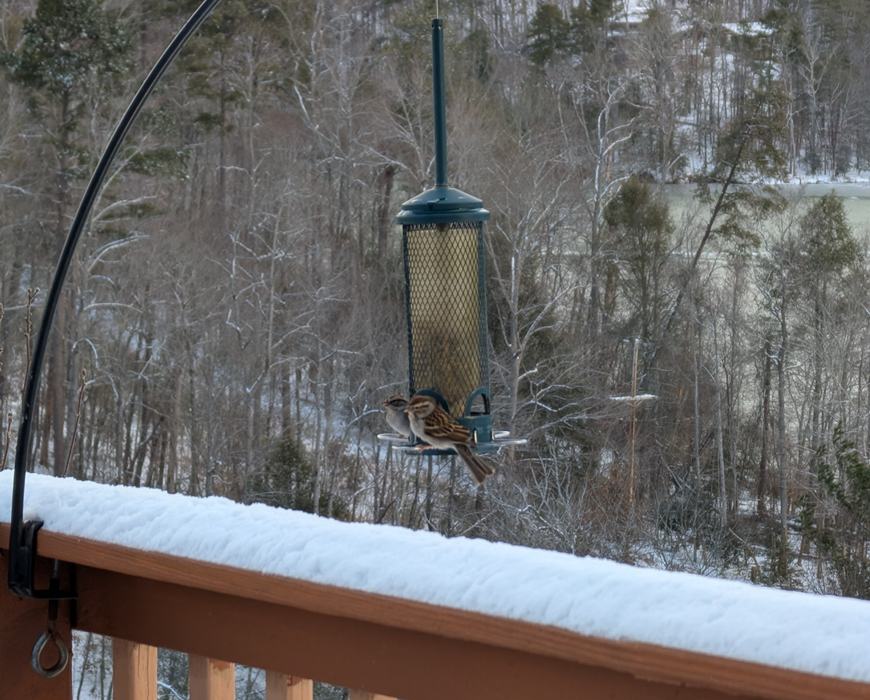
As I age, I find time to smell the roses. But not only do I stop to smell the roses, I relax in my recliner to watch the birds. It's nice knowing that I share this new found joy with my 90+ years young Aunt Dot and others who are afraid to admit to this guilty pleasure. I have two bird feeders that are in my line of sight. They are frequented by Tufted Titmouse, Northern Cardinals, Chipping Sparrows, and even a Red-bellied Woodpecker. Feeding birds means that you should also clean your feeders regularly.
I copied this article from Tancey Cullum Belken, a Water Resources Extension Agent from Clemson University. It contains good information for the young at heart who enjoy attracting birds to your yard with feeders.
Why Clean Your Bird Feeders?
Spring is on its way! Soon, our bird feeders will be frequented by visitors of all shapes and sizes. Moldy seeds and droppings that accumulate around bird feeders can grow mold, host bacteria, and spread diseases among our bird populations. Although songbirds are not commonly infected with Highly Pathogenic Avian Influenza (HPAI), ensuring they have a clean feeding space can reduce the spread of other diseases like salmonella while supporting them along their migration routes.
How Often Should You Clean Your Feeders?
Seed Feeders:
- Should be cleaned at least every two weeks, more often when there are a lot of visitors, rain, or if you find dead birds around the yard.
- Soak each section of the feeder in a diluted bleach solution or hydrogen peroxide for 10 minutes.
- Research shows that 10% bleach (1 part bleach to 9 parts water) is the most effective method to get rid of salmonella.
- Soap and water will also clean the feeders, although not as thoroughly as using bleach.
- Regardless of the cleaning solution, make sure to remove any debris from the feeder by first scrubbing each part with a sponge or brush.
- After scrubbing and cleaning, rinse all parts of the feeder and allow it to dry completely before refilling the feeder.
Hummingbird Feeders:
- Fill with new sugar water two times a week.
- If you notice moldy or cloudy water, wash the feeder and refill it.
- Changes in sugar water may be necessary more often in warmer weather.
- When no mold is present, feeders should be broken down and washed once a week with a 4-to-1 vinegar and water solution, plus a scrub brush.
- If you use bleach to clean the feeder, make sure to rinse off all residue before refilling it.
Cleaning Up Around Feeders
Some birds will forage for spilled seeds below the feeders. Once a month, sweep up any spilled seed or empty hulls on the ground to keep the area clean for the foraging birds, too. Rodents and insects will readily feast on spilled foods, which could be a sign that more frequent clean-up is needed.
I also want to personally plug an app from Cornell University called Merlin Bird Id. You can find it on both Android and iOS. Merlin features the best of community contributed photos, songs, and calls, tips from experts around the world to help you ID the birds you see, and range maps from Birds of the World—all powered by billions of bird observations submitted to eBird. You can even log the birds you see daily.
Additional Resources
- For more information on cleaning your bird feeders and other maintenance tips, visit The Cornell Lab’s All About Birds webpage on Feeding Birds.
- Cornell Lab – Feeding Birds
- The effectiveness of bird feeder cleaning study: Feliciano, L.M., Underwood, T.J., and Aruscavage, D.F. (2018). The effectiveness of bird feeder cleaning methods with and without debris. The Wilson Journal of Ornithology, 130(1):313-320.