2024 Knowledge is Pollinator Power Webinar Registration
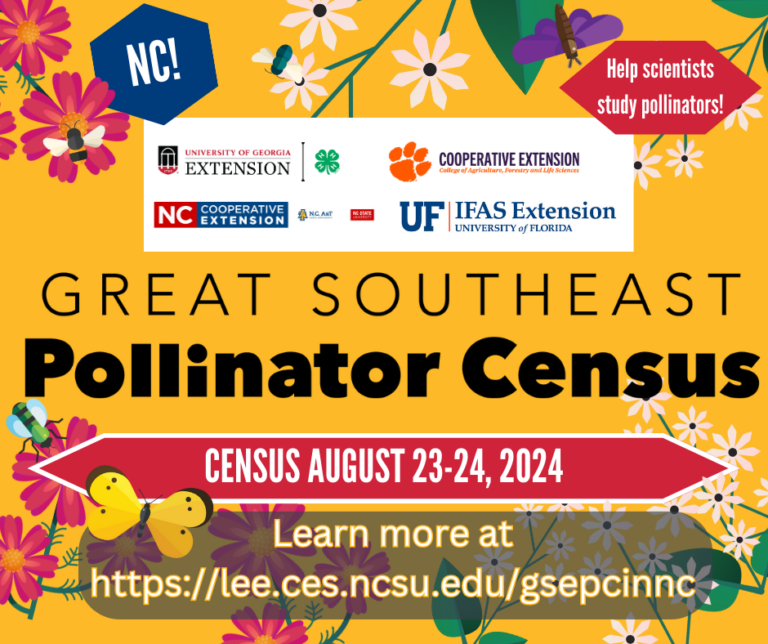
The count is part of the Great Southeast Pollinator Census, created by University of Georgia Extension specialist Becky Griffin in 2019. South Carolina joined in 2022, and North Carolina joined in 2023. Florida has joined in 2024.
This is important because of the function pollinators play in food production.
“Many of our fruits and vegetables have to be pollinated by insects,” said Charlotte Glen, the NC State Extension Master GardenerSM program manager. “To reproduce, they need an insect pollinator to help them out. But many of our pollinator populations are declining. A lot of it is because of foraging and nesting habitat loss. Areas that used to have a lot of natural flowering plants that provide nectar resources aren’t there as much.”
Many people are familiar with a worrying decline in pollinators, particularly bees. The census provides a way to do something about it.
How to Get Involved- Visit the Great Southeast Pollinator Census website for in depth information on how to participate and to download counting sheets and insect identification guides.
- Identify a plant that attracts pollinators, and get ready to count on Aug. 23 and/or 24.