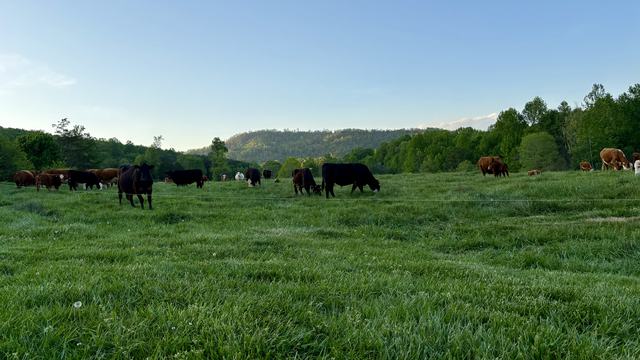
As summer begins to wind down, livestock producers across Western North Carolina should be thinking ahead about fall and winter forage needs. The transition from warm-season summer growth to cool-season forage can be an important time for pasture management, but it can also be an expensive one. With diesel, fertilizer, seed, and other input costs remaining a concern, producers should look for ways to make every dollar invested in their pastures count.
A well-planned fall pasture program does not necessarily require spending more money. In many cases, soil testing, good grazing management, proper timing, and using existing resources efficiently can reduce unnecessary expenses while improving forage production.
Start With a Pasture Assessment
Before purchasing seed, fertilizer, or other inputs, walk your pastures and evaluate their current condition.
Look for:
- Thin or bare areas
- Weed pressure
- Soil erosion
- Compaction
- Poor drainage
- Overgrazed areas
- Fencing or water problems
- Areas with desirable forage versus areas dominated by weeds or undesirable plants
This assessment can help determine whether a pasture needs complete renovation, overseeding, spot treatment, or simply better grazing management.
Not every pasture needs to be reseeded. If a pasture already has a good stand of desirable forage, improving fertility and managing grazing may provide a better return than spending money on a complete renovation.
Soil Test Before Applying Fertilizer
One of the easiest ways to reduce fertilizer costs is to avoid applying nutrients that your soil does not need.
A soil test can help determine the pasture's pH and nutrient levels and provide recommendations for lime and fertilizer. Applying fertilizer without knowing the soil's nutrient status can result in unnecessary expenses and may not improve forage production.
For producers in Western North Carolina, maintaining the appropriate soil pH is particularly important because forage plants cannot efficiently utilize available nutrients when soil conditions are outside their preferred range.
A soil test is one of the least expensive management tools available to a producer.
Before spreading fertilizer this fall, make sure you have a reason for applying it.
Make Nitrogen Work Harder
Nitrogen can be one of the largest fertilizer expenses associated with forage production. Producers should consider whether every application is necessary and how to get the most value from the nitrogen they do apply.
When nitrogen is needed:
- Apply it at the appropriate time for the forage being grown.
- Avoid applying more nitrogen than the forage can utilize.
- Consider splitting applications rather than making one large application when appropriate.
- Avoid applying nitrogen immediately before heavy rainfall when runoff or nutrient loss could occur.
- Calibrate spreaders and equipment to ensure the correct application rate.
Another option is incorporating legumes such as clover into suitable pastures. Legumes can contribute nitrogen to the pasture system through biological nitrogen fixation and may reduce the amount of commercial nitrogen needed over time.
However, legumes require proper soil fertility and pH, and they should be managed appropriately to maintain a healthy stand.
Consider Fall Forages Carefully
Cool-season annuals can provide valuable fall, winter, and early spring grazing. Depending on location, elevation, soil type, and intended use, producers may consider crops such as:
- Cereal rye
- Annual ryegrass
- Oats
- Wheat
- Triticale
- Crimson clover
- Winter peas
Planting dates are important in Western North Carolina because growing conditions vary significantly with elevation and location. Producers should select varieties and planting dates appropriate for their area and intended grazing period.
Do not purchase seed simply because it is inexpensive. Look at expected yield, forage quality, maturity, disease resistance, and suitability for your operation. A cheaper seed that produces poorly may ultimately cost more per pound of usable forage.
Take Advantage of Existing Perennial Pastures
Fall is also a good time to evaluate whether existing perennial pastures can provide additional forage without requiring a major investment.
For example, well-managed tall fescue pastures can provide valuable cool-season grazing. Instead of grazing everything down as low as possible, producers can consider stockpiling forage in selected fields for later grazing.
Stockpiling allows producers to grow forage during favorable conditions and save it for use later in the fall and winter. This can reduce dependence on hay and potentially lower fuel and feeding costs.
The key is to plan ahead. Select areas to stockpile, manage grazing appropriately, and avoid allowing livestock to continuously graze the pasture down before winter.
Improve Grazing Management to Reduce Costs
One of the most cost-effective ways to improve pasture production is often better grazing management rather than more fertilizer.
Overgrazing reduces the plant's ability to capture sunlight and regrow. It can weaken desirable forage species, expose soil, increase weed pressure, and reduce long-term productivity.
Rotational or managed grazing can help producers:
- Improve forage utilization
- Reduce overgrazing
- Allow plants adequate recovery time
- Increase pasture persistence
- Make better use of available forage
- Potentially reduce the amount of purchased feed required
You do not necessarily need an expensive fencing system to begin improving grazing management. Even temporary electric fencing can allow producers to divide pastures and better control where and when livestock graze.
Reduce Diesel Costs Through Better Planning
Diesel costs affect nearly every aspect of forage production. Tillage, planting, mowing, spraying, fertilizing, and hauling all require fuel.
One way to reduce fuel costs is to reduce the number of trips across the field.
Consider:
- Combining field operations when practical
- Using no-till or reduced-tillage practices where appropriate
- Maintaining properly inflated tires
- Keeping equipment properly maintained
- Calibrating equipment before entering the field
- Planning fertilizer, lime, and seed applications together when practical
- Avoiding unnecessary mowing
- Coordinating custom equipment or rental operations with neighboring producers
Every trip across a field requires fuel, labor, and equipment wear. Reducing unnecessary passes can save more than just diesel.
Use Manure and Other Farm Resources Wisely
Livestock producers already have a valuable source of nutrients available through manure. When properly managed, manure can contribute nutrients and organic matter to pastures.
Using manure strategically can potentially reduce the amount of commercial fertilizer needed, but producers should still be mindful of nutrient accumulation and environmental concerns.
Don't Forget the Value of Good Pasture Management
One of the biggest opportunities for reducing input costs is increasing the amount of forage harvested by the livestock from the acres already being managed.
Before purchasing additional inputs, ask:
"Am I getting the most out of the forage I already have?"
Improving grazing management, maintaining adequate fertility, controlling weeds when necessary, protecting desirable forage species, and preventing overgrazing can all help improve pasture productivity without requiring major new investments.
Plan for Winter Now
Fall pasture preparation should also include planning for winter.
Take an inventory of your hay supply now rather than waiting until winter. Estimate how much hay will be needed based on herd size, expected feeding period, and the amount of pasture available.
Producers should also evaluate:
- Hay quality
- Hay storage losses
- Winter feeding areas
- Water availability
- Mineral programs
- Body condition of livestock
- Expected calving or kidding/lambing dates
- Available stockpiled forage
A good hay inventory can help prevent producers from having to purchase expensive hay during a shortage.
Every Dollar Counts
High input costs make pasture management more important than ever. Producers do not necessarily need to spend more money to produce more forage. Instead, the goal should be to make better use of the resources already available on the farm.
Before spending money this fall, consider these questions:
Have I soil tested?
Does this pasture actually need fertilizer?
Can I improve grazing management first?
Can legumes help reduce nitrogen needs?
Can I stockpile forage for winter?
Can I reduce the number of equipment passes?
Am I making the best use of manure and other farm resources?
Do I have enough forage and hay to make it through winter?
Taking the time to answer these questions now can help producers make informed decisions, avoid unnecessary expenses, and improve the productivity of their pastures.
Need Help With Your Pasture?
If you are unsure what your pasture needs this fall, North Carolina Cooperative Extension can help. Soil testing, forage planning, grazing management, weed identification, and pasture improvement are all areas where producers can seek assistance.
A little planning before making an input purchase can go a long way toward improving both pasture productivity and the farm's bottom line.